
Extremely sensitive non-cryogenic magnetometer
Ultra-sensitive Spinner Magnetometer (USM) Features and Functionalities
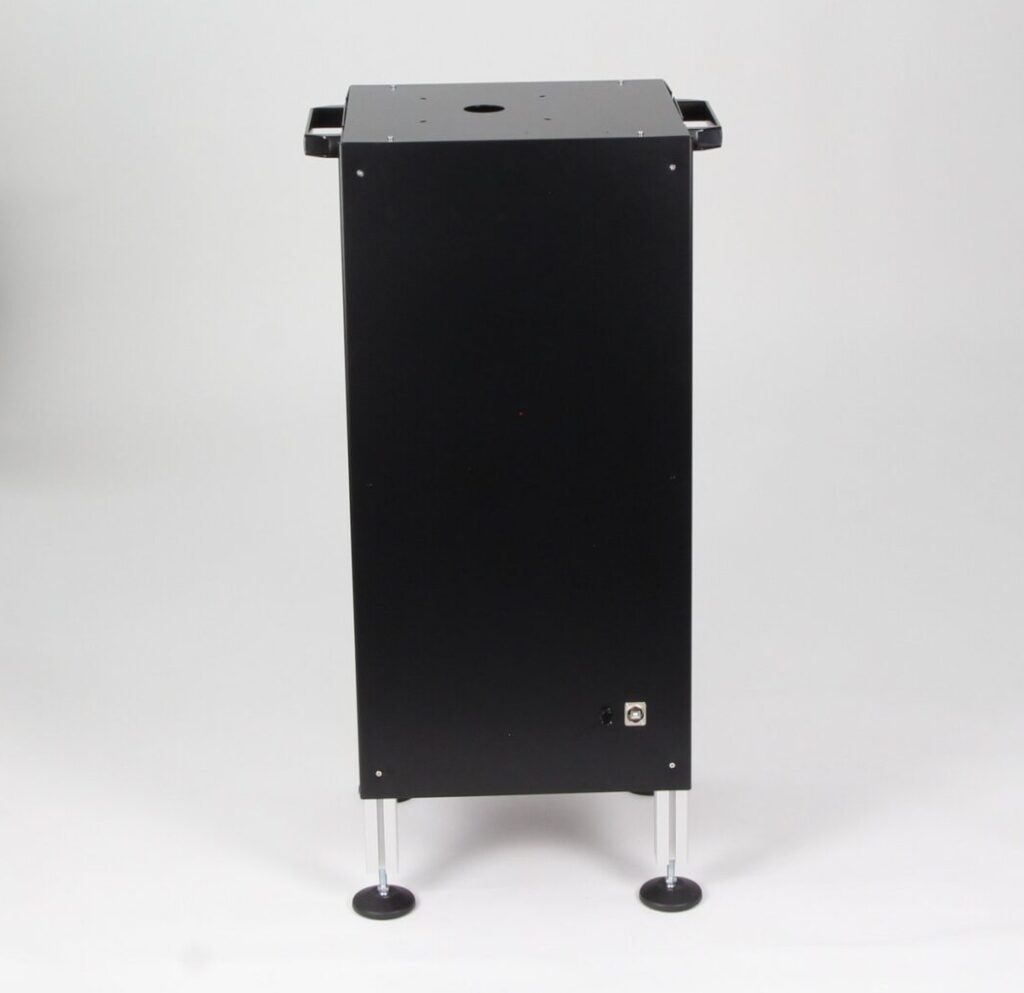
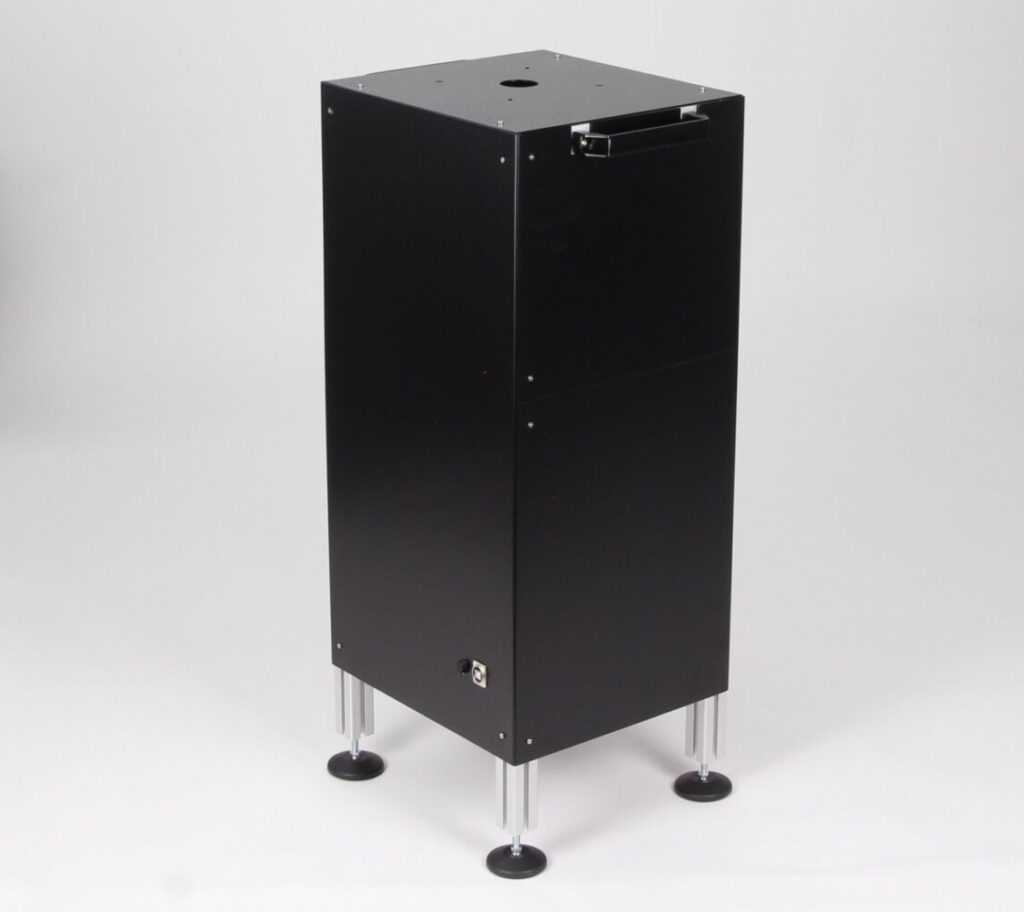
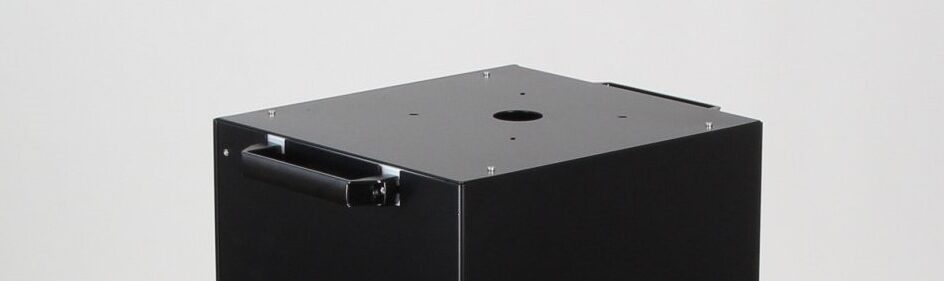
Unveiling the Power of the Ultra-sensitive Spinning Magnetometer (USM)
The Ultra-sensitive Spinning Magnetometer (USM) stands for a new generation of spinning magnetometers with advanced sensor technology at an affordable price. With its large dynamic range, easy maintenance, and no need for superconducting parts, the USM is a cost-effective and versatile research tool. Due to its small footprint and ability to work without cooling systems or shielded rooms, the USM is made to fit in every laboratory. Our comprehensive brochure provides an in-depth exploration of the USM’s capabilities. From high-precision measurement to the unique homogeneity indication feature, the brochure details the many ways the USM can enhance your research.
Main Purposes
- Highest precision measurement of remanent magnetization in standard, homogeneous one-inch core samples without the cost, maintenance, and space requirements of a superconducting rock magnetometer.
- Collection of accurate data on the magnetic properties of various materials, aiding researchers in their studies.
- Indication of the level of sample homogeneity within a sample, providing critical insights into the uniformity of the sample’s magnetic properties.
Key Features
| Extremely sensitive, non-cryogenic magnetometer | Without dependency on superconducting parts, the USM operates extremely reliably and does not involve any external devices or cooling |
| Easy measurement procedure | Intuitive software, custom sample holders, and an optional automatic rotator ensure an efficient workflow |
| Large dynamic range | The USM uniquely covers a measurement range spanning up to 11 magnitudes with a noise level of only 8×10-12 Am2 and promotes a wide range of applications from analyzing weakly magnetic environmental and biological samples to investigating strongly magnetized synthetic materials |
| Measurement of fragile samples | The USM’s slow spinning rate of 2 Hz allows the measurement of fragile materials, such as unconsolidated sediments |
| Extensions available | The availability of three different extensions for the USM (see below) allows the instrument to be customized to the exact needs of your studies. Its small footprint additionally ensures it can be used in every laboratory |
| Multi-sense and movable sensor (optional) | The use of a multi-sense setup and an adjustable sensor position inside the sample cavity allows for an increased measurement range and precision for various sample geometries, thus ensuring optimal results for all kinds of specimens |
| Automatic rotator (optional) | The available rotator feature enables automatic change of the sample orientation for fully automated measurements, minimizing user actions |
Additional Functionalities
- Custom exchangeable sample holders for a variety of sample sizes and geometries
- Quad-layer permalloy shielded measurement cavity ensures minimal influence from external magnetic fields, even without external compensation
- Automatic adjustment of attenuation and rotations based on sample strength
These features and functionalities make the USM a versatile and portable device for the measurement of remanent magnetization in standard core samples. Its compact design, easy operation, and additional functionalities enhance the magnetic analysis process and enable efficient data collection.
Specifications
| Specification | Value (Basic version) |
|---|---|
| Dynamic range | 8×10-12 – 1×10⁻⁶ Am2 (8×10⁻⁹ – 1×10⁻³ emu) |
| Sensitivity (one-inch core) | < 8×10-12 Am2 |
| Residual field | < 5 nT |
| Specimen dimensions | ∅ 3-25 mm, 23 mm cube or prism. Others upon request. |
| Dimensions (WxDxH) | 42 x 37 x 90 cm |
| Spinning frequency | 2 Hz |
| Sample handling | manual |
Dedicated Software
The USM is operated through Integrated Laboratory Software (ILS), a dedicated control and data-management software. ILS provides a structured data model with a Project → Site → Sample → Specimen hierarchy, enabling users to capture and maintain complete metadata at each level. All entities can be created, edited, and deleted directly within the software. Specimens can also be grouped flexibly, allowing batch processing and faster, more consistent analysis across multiple specimens.
For paleomagnetic workflows, ILS includes a comprehensive library of standard measurement routines, including NRM, AFD, THD, IRM, ARM, AARM, and BF, as well as user-defined routines. This enables users to build, execute, and save multi-step measurement sequences across individual specimens or specimen groups. For each measurement step, ILS displays the required specimen orientation on the sample holder, and during an automated sequence (up to six positions), no additional user input is required; after completion, the software automatically advances to the next specimen in the measurement list. Results are displayed in real time in both tabular and graphical form, including Mx, My, Mz, |M|, D, I, Dg, Ig, Ds, Is, with visualization via stereonet and Zijderveld plots in specimen, geographic, and tectonic coordinates, using N/Up and W/Up projections. Results can be exported per specimen or per group in multiple formats.
In addition, ILS provides a Python interface for direct access to the project database. Users can develop custom Python scripts to query and parse measurement data, perform advanced data processing, generate custom plots, and export in user-defined formats. Scripts can be shared and collaboratively developed across laboratories, creating a collaborative library of reusable tools for data processing, visualization, and export.

Available Extensions
- Movable sensor to maximize the instrument’s sensitivity for different sample geometries, e.g., for mini cores, the sensitivity is increased by one order of magnitude compared to standard one-inch cores
- Multi-sense to increase measurement range up to 0.1 Am2 for strong samples
- Rotation function to enable automated measurements where the sample only needs to be inserted manually once
Note that the available extensions for the USM can be added later on without shipping the device back to us.
| Extension | Affected Property | Value |
|---|---|---|
| Movable Sensor | Sensitivity (mini core) | 7×10-13 Am2 |
| Multi-sense | Measurement range | 8×10-12 – 0.1 Am2 (8×10⁻⁹ – 100 emu) |
| Rotator | Sample handling | automatic |
Measuring Remanent Magnetization and Indicating Sample Homogeneity
USM Application Fields
Whether unraveling the mysteries of Earth’s magnetic past or studying environmental changes, the Ultra-Sensitive Spinning Magnetometer (USM) empowers researchers to delve deeper into the magnetic world and extract valuable insights from their samples.
Paleomagnetism
Measuring natural remanent magnetization of discrete specimens (e.g., 1-inch cores/cubes) before/after stepwise AF or thermal demagnetization to isolate the characteristic remanence for plate tectonic reconstructions, and investigation of the nature and history of the geomagnetic field.
Magnetostratigraphy & core dating/correlation
Building polarity and paleointensity magnetostratigraphy from sediment, lava flows, and rock sequences to correlate sections and constrain ages.
Environmental magnetism & paleoenvironmental reconstructions
Measuring natural remanence and laboratory-induced signals (e.g., ARM/IRM) of soil and sediments used as proxies for sediment composition, transport, and environmental change in paleoclimatic and paleoceanographic studies.
Archaeomagnetism
Investigation of the magnetic properties of soil samples and archaeological artifacts to help refine the interpretation of magnetic survey anomalies, and to determine the paleointensity of baked archaeological artifacts for dating purposes
Rock Magnetism
High-sensitivity, 3-axis measurement of natural and laboratory-induced remanence (NRM, IRM, ARM) to quantify remanence acquisition and demagnetization behavior, magnetic grain size, and magnetic mineralogy, and to support rock-magnetic characterization of rocks and sediments ranging from weakly to strongly magnetized.
Please note that some of these applications require the use of additional demagnetizing equipment. The USM itself serves as a tool for measuring remanent magnetization and indicating sample homogeneity in standard, homogeneous one-inch core samples.