
Impart Magnetizations on Highly Coercive Materials with Precision and Control
Pulse Magnetizer (PM) Features and Functionalities
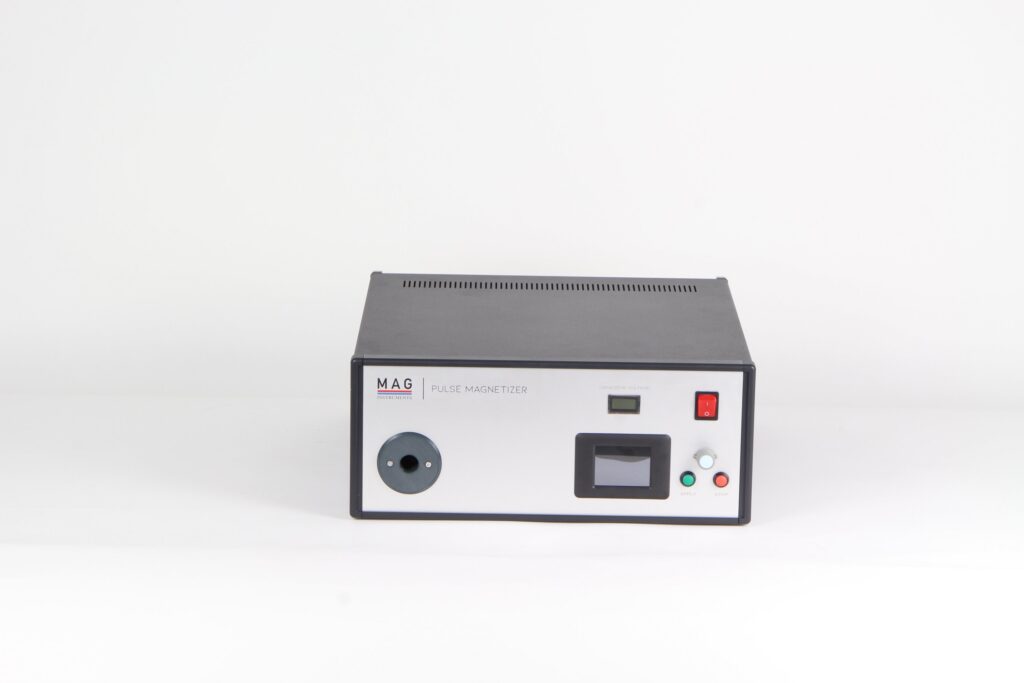
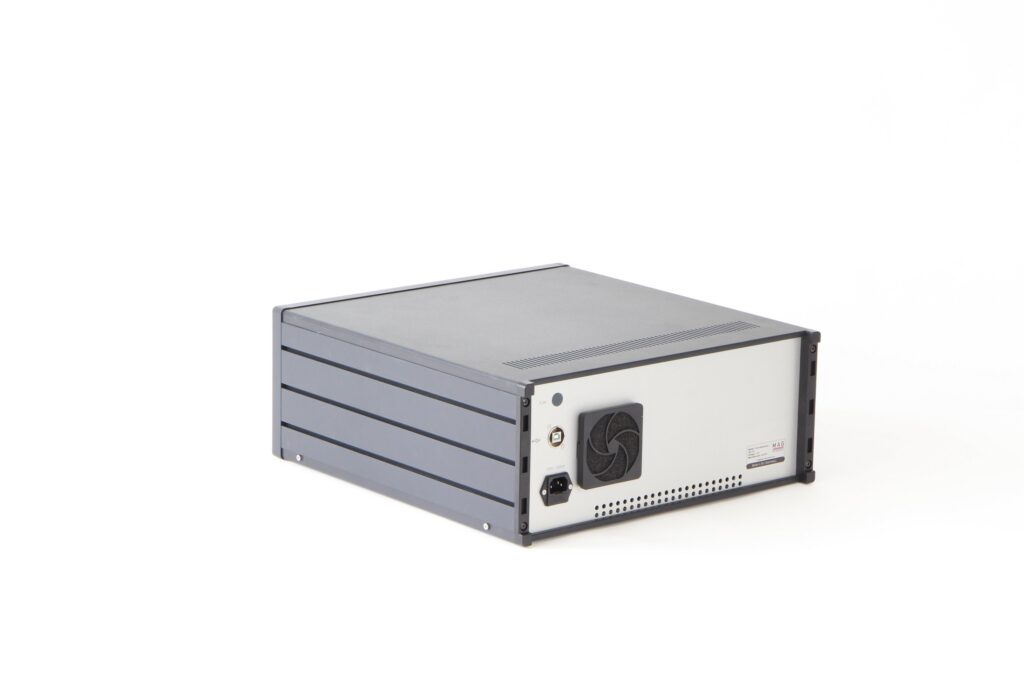

Exploring the Capabilities of the Pulse Magnetizer for Magnetic Treatment
Pulse Magnetizer (PM) is a versatile instrument for applying strong, well-controlled magnetic pulses to a wide range of materials and components. It is used wherever reliable, repeatable magnetization is required, from research applications and material characterization to the treatment of permanent magnets, sensors, actuators, and other magnetic components. Its precise pulse control makes it especially well-suited for demanding applications involving highly coercive materials.
The new Pulse Magnetizer from Mag-Instruments is fully digitally controlled and can be operated either through its built-in graphic LCD interface with dedicated knobs and buttons or remotely via a connected PC. Seamless integration with our comprehensive laboratory software suite allows you to control all of your instruments from one unified system—a feature that sets the PM apart from any other solution on the market.
Each system can be delivered with custom-designed coils tailored to various sample sizes, as well as specially made sample holders to ensure comfortable handling of any type of specimen. Additionally, every coil comes equipped with a built-in temperature sensor. Constant temperature monitoring lets us adjust the internal capacitor’s voltage and maintain a stable magnetic pulse, ensuring reliable and consistent experimental results. Check out our downloadable brochure to learn more about the PM’s capabilities.
Main Purposes
Our compact pulse magnetizer has a perfect size for any laboratory application, and is designed for:
- Magnetization of small permanent magnets (Neodymium, ferrite, samarium cobalt) as blocks, rings, and segments.
- Magnetizing magnets in tweeters, midrange drivers, small woofers, headphones, and microphones.
- Magnetizing small sensor and actuator magnets (Hall, reed, encoder rings, relays, latching solenoids, and valves).
- Magnetizing small tools and bits (magnetic screwdrivers, inserts, small fixtures).
- Magnetizing geological and archeological samples for remanence and coercivity measurements in research labs.
- Paleomagnetic and rock-magnetic applications (IRM acquisition, remanence and coercivity studies)
Key Features
| Precise field control | Provides accurate control of the magnetizing field strength in millitesla (mT) for consistently reliable results |
| Self-contained tabletop design | Compact dimensions (43 x 18 x 45 cm) and weight under 18 kg ensure easy integration into any laboratory setting |
| Seamless integration with other MI Instruments | Fully compatible with our laboratory PC software, enabling centralized control and data management across all connected instruments |
| Dual operation modes (with or without a PC) | Operate remotely from a connected PC or adjust the field strength directly using the knob beside the built-in LCD interface |
| Custom-designed coils and sample holders | Tailored coils and holders ensure a precise fit for any specimen size and geometry, optimizing the magnetization process |
| Capacitor charge voltage indicator | Direct feedback of the capacitor’s current charge level allows for effective monitoring and adjustments |
| Built-in temperature sensor for coils | Continuous temperature monitoring enables automated tuning of the internal capacitor voltage, ensuring a stable and consistent magnetic pulse |
The PM offers precise control, flexibility, and comprehensive functionalities to effectively magnetize samples in various scientific applications. Its key features and additional functionalities ensure accurate and efficient magnetization processes.
Specifications
| Property | Value |
|---|---|
| Peak field | 4 T (∅1.25 cm sample OD) 2.9 T (∅2.5 cm sample OD) inquire for other dimensions |
| Field controller resolution | 12 bit |
| Sample handling | manual (handler provided) |
| Power supply | 110 or 230 V |
| Power consumption | 450 W while charging |
| Charge time | < 10 s |
| Weight | < 18 kg |
| Space requirements | 43 x 18 x 45 cm |
Essential Tool
Pulse Magnetizer Application Fields
The Pulse Magnetizer’s versatility and precise field control make it an indispensable instrument across multiple scientific disciplines. By enabling the controlled and repeatable magnetization of a wide range of samples, it supports accurate and insightful research in the following areas:
Industrial Permanent Magnets & Tools
Effectively magnetize small permanent magnets, such as ferrite, NdFeB, and SmCo blocks, rings, and segments, as well as magnetic screwdrivers and bits. Pulse magnetizer is ideal for laboratories and production lines that need precise, repeatable magnetization of compact magnet components and magnetic hand tools.
Motors, Sensors & Audio Components
Use the Pulse Magnetizer to precisely magnetize rotors in small motors (e.g., RC, gimbal, and other compact BLDC designs), as well as magnets in tweeters, midrange drivers, small woofers, headphones, earbuds, and microphones. It also serves for magnetizing small magnets in sensors and actuators, including Hall and reed sensors, magnetic encoder rings and disks, relays, latching solenoids, and valves.
Paleo and Rock Magnetism
Use the Pulse Magnetizer to impart a well-defined remanent magnetization to oriented rock samples. Its controlled field pulses enable detailed studies of coercivity and remanence, helping to reconstruct geomagnetic field pale-intensity and to identify magnetic carriers in volcanic and sedimentary rocks.
Environmental & Material Sciences
Magnetize soils, sediments, and engineered materials to characterize their intrinsic magnetic properties. The PM’s stable, adjustable magnetic pulses enable investigations of pollution records and climate-related variations, as well as key parameters such as coercivity, saturation magnetization, and magnetic grain interactions.
Archaeology
Introduce controlled magnetization to soil and archaeological artifacts to enhance the interpretation of magnetic anomalies detected in archaeological surveys. This process improves the accuracy and resolution of magnetic mappings, aiding in more informed archaeological interpretations.